Showing posts with label news. Show all posts

Wednesday, June 16, 2010

Behind David Knight's KTM 450XC

By Steve Bruhn
Shawn Mundy may have the toughest mechanic's job in motorcycle off-road racing. He's the mechanic for KTM's international "tough guy" David Knight, who is leading the AMA's GNCC series on a 2007 KTM 450 XC.

"Knighter," from the Isle of Man, UK, is KTM's Number 1 guy for the toughest races they can find. Knight is 6'4", very strong, and can throw a big bike around like a 125. Mundy and he paired up when KTM brought Knight into the US for events like the EnduroCross and Last Man Standing, and now Mundy joins him around the globe, doing major damage wherever they can find a race that rewards the tough.


Mundy and Knight check all the details before a
 3-hour race.
David Knight (right) is known for his ridiculous technical skill on a bike. The man responsible for letting him do his thing unimpeded is Shawn Mundy (left).
This interview took place about 4 hours before Knight won the Snowshoe GNCC with one of the biggest leads in the series' history. Knight himself actually finished three interviews before the second place rider was in. Their next race was a 4-day enduro in Australia, and they won that too!

Most of the GNNC riders use 2-stroke 250s since a 450 can take a hefty toll on one's endurance after three hours in the woods. Knight however, handles his 450 in the woods with the skill of a former trials rider, and benefits from extra speed in the open sections. That's a tough combination for anyone else to beat.

Mundy, from Booneville, IN, started with KTM eight months ago and was assigned to Knight for some American events. "I did the Las Vegas EnduroCross (and) the Last Man Standing," he said, "We had another race called 'The Tough One' in Wales and I went and did that, and then started the GNCC. I do all the events that I can with David."

Knight's bike is a 2007 450 XC with works suspension, a motor with some "bite" and modifications to prepare it for three hours of competition in the woods. The engines are prepared in Austria by the factory.

"They (KTM) have an XC-W which has wide-ratio transmission," said Mundy, "which would be for desert racing. Out West you find more XC-Ws. We have an SX model too, but this XC is an all around bike."

That wheel has to be tough enough to take a 
serious pounding for three hours and not fail. Mundy relies on Talon s 
carbon fiber hub.
That wheel has to be tough enough to take a serious pounding for three hours and not fail. Mundy relies on Talon's carbon fiber hub.
"The motor is actually done in Austria," he continues. "They do all the engine work and send them here. I check the valves after each race. For the most part, the motor is pretty bulletproof. They say to go 60 hours but we try and not let them go that far before they get rebuilt."

Since Knight still lives at home in the Isle of Man, he doesn't spend much time riding anything but his race bike. "He has a practice bike here but he doesn't ride it much," said Mundy, "because he flies in to where the race is going to be, then he wants to ride the race bike to make sure it's good. He has bikes at home that he rides at the Isle of Man.

"KTM has a good crew here (at the GNCCs). There are different guys stationed at different mile markers so we know how David is doing. We all know about where he should be. Normally I stay in the pits because I have to be prepared in case he may come in from somewhere else."

Is Knight really the fastest, toughest guy? "Yeah, for sure," said Mundy, "He is just an animal on a bike. He can throw it wherever he wants. He came from trials riding, so his balance is unreal. Even on these full-size bikes, he can do trials stuff. In real tough events, he specializes in technical stuff."

Making David Knight's KTM 450XC

Motor - "It's not super-hopped up at all. We run more of an SX-style (ignition) curve. The regular XC doesn't have the strong hit that David likes."
Knight is a giant. He really does throw his 
450 around like it was a 125.
David likes a little more bite to his motor than the stock XC provides, but other than a SX-style ignition curve, the 450cc engine is relatively stock.
Clutch -
Stock.
Carb - Stock 2006 450SX 41mm.
Exhaust - FMF.
Air Filter - Twin Air.
Suspension - WP works suspension, 52mm forks.
Fuel Tank - IMS, wrapped with heat tape. "Normally we can do a race on two fuel stops. A lap on an average GNCC is 10-14 miles. We can do it in one stop, but if we have a big enough lead, we will stop for a splash just in case."
Brakes - Factory rear master cylinder, Brembo caliper with Enduro Engineering guard. Factory Brembo front caliper. "On the (front) master cylinder there is a pin that we grind down, to make the lever closer. It's just a rider preference." Chain - Regina O-ring.
Sprockets/Bars - Renthal.
Radiator - Fluidyne with Evans coolant.
Tires - Michelin with Mousse tube. "We normally run an MS3 Michelin which is for all-around, but here in West Virginia where there are a lot of rocks we are running an S12, which is a softer rear.
Footpegs - Stock.
Grips - KTM.
Wheels - "We run the Talon Supercross hubs with the Excel A60 rims. The front hub is carbon fiber."
Seat - SDG.
Plastic - Stock.
Graphics - Image Works.
Extras - We use thread tape on the brake and clutch lever perches instead of Teflon bushings. We put holes in the skid plates, to allow some of the heat from the motor to get out.
Security - In Supercross they do a lot of greasing bolts. That's where I came from and got in the habit of doing. With these bikes we use a lot of LocTite on every bolt. We also put new bolts in every race. The whole thing gets all new bolts.

Dr. Frazier’s Java Indonesia Adventure

I managed to find some off-road riding between small villages. It 
was fun jungle adventuring when dry  not so when raining and the mud 
became slickly adventuresome.
After reading through Carl Stearns Clancy's book Motorcycle Adventurer and seeing no mention of Java it became apparent that I needed to conduct a trip through the island.
“Java, ‘one magnificent garden of luxuries,’ is much better known to the tourist, and everyone who has visited there seems enthusiastic over its charms. One man put it, ‘Java fulfills my preconception of what a paradise ought to be.’ Java is a little larger than Cuba, and is so mountainous that, in spite of its proximity to the equator, its climate is like ours in spring. Eight of the mountains are active volcanoes, some of which form the wonders of the island….

“I was told that Java’s resources as regards objects of interest and means of enjoyment would last one for several months. There is big game handy for the sportsman; Hindoo temples for the student of ancient architecture and civilizations; primitive customs to be investigated by the socially curious; a model government system for the observation of the political economist; a chain of unrivalled volcanos to delight the geologist and scientist; famous botanical gardens for the botanist; and scenery of unsurpassable beauty and grandeur for the motorcyclist. So much have I heard Java praised, in fact, that I have determined to motor through it at the first opportunity.”

So wrote Carl Stearns Clancy, the first motorcyclist to circumnavigate the globe in 1912-1913. I had been researching the Clancy story for 16 years, following much of his nearly 100 year-old route around the world for a new book titled Motorcycle Adventurer (www.motorcycleadventurer.com). For a myriad of reasons, Clancy never managed to pilot a motorcycle through Java, but his praise found me wanting to hunt it for him in 2010.

Java is part of Indonesia, an Independent Republic since 1945 after freeing itself from Dutch colonization that started in 1602 and then Japanese World War II occupation from 1942-1945. The country is made up of over 17,500 islands, the fifth-largest of which is Java. The 13th-largest island on the planet, Java is roughly the size of New York State in the U.S., with a population of over 124,000,000, making it one of the most densely populated areas in the world.
The active volcano on the left is Mount Bromo  located inside a 
national park. The base parking lot area was easily reached by 
motorcycle  but I passed on the last mile hike up to the 7 641 foot 
summit  being a motor biker  and not a hiker.
The active volcano on the left is Mount Bromo, located inside a national park.

The island is almost entirely volcanic in origin with no fewer than 38 mountains that were all at one time active. The mountains run nearly the length of the island west to east, the highest being Mount Semeru at 12,060 feet above sea level. The primary language is Javanese and close to 90% of the population is Muslim, with a per capita income estimated at $3,900.

So the island is mountainous, lush, jungle-like, occupied by poorer people whose language I did not speak, with a religion not close to my native culture. Those elements, along with knowing there were millions of small motorcycles on the island, many well-paved roads and Clancy’s glowing endorsement of a paradise, spelled motorcycle adventure for me.

The first risk was forgetting that not all the world drives on the right side of the road. Java, as with the rest of Indonesia, followed the British driving style and chose to make their system left handed. As soon as I drove off the boat and onto the main road I had to remember to keep my left-hand driving style switch turned “On.”

With so many small motorcycles crashes do happen. Pictured here  
the red motorcycle had spilled after the front wheel got caught in a 
crack in the road  dumping the driver and passenger. Neither was hurt as
 the speed was about 10 mph.
With so many small motorcycles crashes do happen. Pictured here, the red motorcycle had spilled after the front wheel got caught in a crack in the road, dumping the driver and passenger. Neither was hurt as the speed was about 10 mph.
While the main roads were well paved, most were two lanes and bogged down with many slow moving trucks, buses and an occasional ox cart or cycle-rickshaw. A nimble lightweight motorcycle served best to pass slower vehicles in tight spaces, which seemed never ending on the major routes. While most of the local motorcycles were in the 100-125cc displacement range, there were a few that were considered large that displaced 250cc. Most of the traffic moved along at a sedate 35-60mph so having a 1200cc -1800cc heavyweight cruiser or behemoth adventure motorcycle would have been manhandling unneeded horsepower and weight.

The gems of Javanese roads were the small roads that went over the central mountain range. Often these would be so tight and twisty only small cars and motorcycles use them. They would snake up through two mountains through green jungle and terraced rice fields, sometimes into cold gray clouds and rain, and then down the other side toward the hot and humid ocean routes.

Due to the closeness to the equator, Java received rain. Each day it seemed some driving involved either sitting under an overhang waiting for a few clouds to dump water and blow over or suit up in rubberized riding gear and slosh through the drizzle or downpour. On the mountain tops and ridges the rain was cold, but if I could man-it out long enough I would drive to a lower elevation where it would be a warm wet.

For the Western palate I saw both Kentucky Fried Chicken and Pizza
 Hut fast food outlets in the larger cities  succumbing once to check 
the price and feed a minor homesickness for junk food.
For the Western palate I saw both Kentucky Fried Chicken and Pizza Hut fast food outlets in the larger cities, succumbing once to check the price and feed a minor homesickness for junk food.
Food was never a problem with restaurants or stores being easy to find. A Kentucky Fried Chicken restaurant in a large city sucked me in for one meal, more to feed a Westernized missing-of-fast-food habit than a desire to quit eating the Indonesian fare. Bottled water was available everywhere, as was soda and bottled fruit juices.

For the beer swiller their fix was a bit harder to find for that end-of-the-day cold one. Some stores sold beer, as would occasional restaurants, but only twice did I see a sign advertising alcohol. Alcohol seemed to be sold more as the result of foreign tourist demand than for local purchase.

Sleeping was a mix of tourist hotels in tourist areas, guesthouses and some lower priced backpacker places obviously targeting foreigners. In non-tourist towns there were usually local hotels in the inner city, often near the bus stations. All sleeping places, whether a beach hotel or an inner city hotel, were within an easy day drive between points. But if I was looking for indoor sleeping versus the jungle in places in between, it would be the jungle more often than a mattress with a mosquito net. The best daily plan was to target a tourist destination and have fun driving little roads in between.

Pictured here is a happy German motorcycle traveler who had found a
 cold beer at the end of her day of motorcycle adventuring. I saw almost
 no advertising for alcohol  but some tourist hotel restaurants and 
tourist restaurants did serve swill.
Pictured here is a happy German motorcycle traveler who had found a cold beer at the end of her day of motorcycle adventuring.
During my time in Java I met not a single other American traveler. Those tourists I did meet were most often German or Australian. I saw only three clearly identifiable foreign motorcycle travelers, two traveling in the opposite direction that did not stop, but looked to be on KTMs with Australian plates, and one German lady adventurist on a Honda 250cc Tiger.

The biggest danger I found was traffic. Unlike India or Bangladesh, where the road hierarchy is based on size, and motorcycles being near the bottom with trucks and buses at the top, there seemed to be a limited mutual respect in Java of space for either motorcycles or bigger vehicles. Some horn honking would take place as a bus or truck would come up behind a cycle-rickshaw or ox cart to tell them to move over. Sometimes an oncoming car, bus or truck would pass a slower vehicle leaving me little choice other than to take to the shoulder of the road, but most often they would flash their lights and give me warning so I could slow down and take avoiding action. I had been warned before going to Java about the possibility of hostile people. In reflection I found none outwardly hostile while on two feet, but some were hostile in a sense when one foot was on the gas pedal of their vehicle.

Gas was plentiful, but varied in dispensaries. In and around larger cities there were gas stations, often with a mini-mart. Attendants would fill the motorcycle gas tank, carefully. Cash was the means of payment. I saw not one debit or credit card payment point at gas stations. Away from the main roads and large urban areas gas was sold by the liter from glass bottles in front of markets, motorcycle repair shops or individual houses, cash again being the only means of payment.
In the cities and on main roads gas stations were typical  but 
once away from these  gas was sold from bottles by the liter.
In the cities and on main roads gas stations were typical, but once away from these, gas was sold from bottles by the liter.

Small displacement motorcycle repair shops were in every town or village. Once my spark plug went bad and I managed to drive to a small repair shop. Not only did the mechanic replace my bad spark plug with a new one, he also topped off my oil for a total of $2.50 USD including 10 minutes for labour. Again cash was the only acceptable means of payment. I forked over the equivalent of $3 and told the mechanic to use the change to buy some tea or a soda.

I stopped at a Kawasaki dealer showroom to see what models they sold. It had a well appointed showroom with several new models on display, the largest being 250cc. When I told the owner I had a KLX250S in the United States, he wanted me to meet the one owner in town they had sold a KLX250 to, but the he was at work. With the import tax the Indonesian owner paid close to twice what I had for my KLX250, the high import tax being one of the reasons there are so few large displacement motorcycles in Indonesia. I gave some of my personalized travel stickers to all the workers at the Kawasaki shop and some for the KLX owner. All seemed very pleased to have a sticker from America.

As I moved further west towards Jakarta the traffic on the main roads became more congested and I became less interested in playing “dodge the oncoming bus/truck,” so
Pictured here is some typical paradise jungle riding  well away 
from the congestion of the main highways.
Pictured here is some typical “paradise” jungle riding, well away from the congestion of the main highways.
found myself avoiding the bigger cities and choosing the small roads in and out of the mountains.

Some of the forests I drove through were enchanting, with green tree branches and vines hanging over the road making it feel like a tunnel through the jungle. While I saw signs warning of tigers, snakes and monkeys, none showed themselves.

The mountain and twisty jungle motorcycling of Java was good. The people I met all seemed friendly and helpful, especially the motorcycle people, whether in shops or driving on the road. Eating, sleeping, and even imbibing were reasonably easy and comfortable.

However, as I stood on the shores of Java, looking westerly at the horizon across the Indian Ocean towards India, I realized the Java that Carl Stearns Clancy wanted to pilot his motorcycle in, on or through in 1913, was a far different Java than the one I had seen for him nearly 100 years later. The Hindu temples were still there, as were the volcanoes, jungle and interesting society. Java was still a paradise in places, but much of the rest of it had become a little worn, albeit by time or man. I, like Clancy, was wishful of having motored through this paradise in 1913, not a paradise lost but today a paradise made smaller by the advancement of man.
S: http://www.motorcycle-usa.com

Thursday, June 10, 2010

Silly Season: Ducati offers a Blank Cheque to Valentino Rossi?

rossi ducati
We thought that silly season had died down with Valentino Rossi out of action, and everyone involved was now finally working quietly behind the scenes, but apparently we were wrong, because Spanish website motocuatro.com citing RTVE MotoGP commentator and journo Ernesto Riveras, has revealed that Ducati is making an aggressive move towards Valentino Rossi and offering a blank cheque to have him on the red bike in 2011.
Naturally we’re taking this rumuor with a bushel of salt (sportmediaset docet) because Marlboro has renewed their contract with Ducati only till the end of 2012 (instead of the usually 4 or 5 years) so money may be tight, but it’s true that Ducati is worried about their star rider, Casey Stoner. Last year he had “mysterious” health issues and missed three races and this year the Aussie just isn’t gelling with the GP10, he’s been constantly under par with problems that Ducati has so far unable to solve permanently and without forgetting that Stoner may have really signed a pre-contract with Honda.
Valentino Rossi has already announced ad nauseaum that he wants to stay in Yamaha, but his broken leg that ended his championship title hopes has changed the balance not only for viewers, but also inside Yamaha. Lin Jarvis has insisted that he wants to keep both of his riders, but can Rossi accept another year alongside Lorenzo, that until Rossi’s crash at the Mugello was beating him on the same equipment?
Source: twowheelblog.com

Valentino Rossi Released from CTO Hospital

valentino rossi
Fiat Yamaha has released the following update on Valentino Rossi:
At 1530 CET today Valentino Rossi was released from the Centro Traumatologico Ortopedico in Florence, Italy, where he has been recovering following surgery last Saturday to mend his broken right leg.
He was taken by ambulance to a helicopter and is now being flown to a hospital in Cattolica, close to his home, where he will meet with doctors to discuss the next stage of his recovery.
More information and details about his condition will be sent later today.
The hospital in Cattolica is just 10 km from Tavullia and is closer to Ravenna where Rossi may undergo hyperbaric oxygen therapy - HBOT, to speed up recovery. The Ravenna hospital is also where Mick Doohan was taken to save his leg from amputation after his 1992 crash.
Source:twowheelblog.com

2011 KTM 350 SX-F First Ride


2011 KTM 350 SX-F First Ride
We were eager to see if the 2011 KTM 350SX-F was the happy median between the agile 250cc and brutish 450cc motocrossers.
After months of announcing its intension to create a new 350cc 4-stroke motocross bike, Austrian motorcycle manufacturer KTM gave Motorcycle USA the opportunity to ride its eagerly anticipated 2011 KTM 350 SX-F. Not only is the 350 an all-new model in KTM’s line-up, it creates an entirely new category for the motorcycle industry. It was engineered to attract both racers and recreational dirt bike riders seeking a happy-medium between the agility and high-revving performance of a 250F and the brute power and versatility of a 450F. After spending a day at the controls of it at Southern California’s fabulous Pala Raceway, we are impressed with the hybrid qualities of this unique off-road motorcycle.

ENGINE

As the nomenclature implies, the 350 SX-F uses a liquid-cooled 4-stroke single-cylinder engine. The piston slides 57.5mm inside the 88.0mm cylinder bore which equates to exactly 349.7cc of combustion volume—placing it right in between that of a 250F and 450F machines. Fuel is compressed to a ratio of 13.5:1 which is the highest measurement of any KTM off-road bike and signifies the potential
Videos Our Sponsor
2011 KTM 350 SX-F First Ride Video
Click to view video
Watch the the 350 SX-F in action as we tear it up at Pala Raceway in our 2011 KTM 350 SX-F First Ride Video.
for serious engine performance across its 13,000 rpm rev range. Other hot rod techniques include the dual camshafts driving the four titanium valve-equipped cylinder head.

Similarly to the 250 SX-F, the 350 uses a dual-pump engine lubrication system. It also employs a balance shaft which acts as a water pump and camshaft drive thereby reducing engine vibration while helping to maintain petite engine dimensions. Also shared between models is the Keihin electronic fuel-injection system.

The system makes use of a single fuel injector that sprays into a 42mm throttle body. There is no fast idle or choke/cold-start knob and the system automatically meters fuel/air ratio based on atmospheric conditions. Spent fuel is passed through a stainless-steel header (without a head pipe-mounted external resonator) and a long aluminum muffler.

2011 KTM 350 SX-F First Ride
The 350 SX-F features a liquid-cooled 4-stroke 349.7cc single with a 88 X 57.5mm bore/stroke and the highest compression ratio amongst KTM off-roaders at 13.5:1.
The FI system is powered directly by the AC generator and capacitor (attached to the throttle body). As soon as the battery-powered starter button is pressed enough electricity is generated to power the fuel-injection system. While there isn’t a conventional kick start lever, it is available as a PowerPart accessory, though we wonder why you’d ever consider its fitment with the convenience of a handlebar-mounted push button electric start.

Additional PowerPart accessories come in the form of a Map Select Switch and User Setting Tool that allow the rider to adjust engine mapping on the fly with the handlebar-mounted Map Select Switch—a first for the motocross bike world—or with your computer via the User Setting Tool.

Power is transmitted to the 110-series Bridgestone M70 rear tire through a 5-speed gearbox and 14/50 final drive gearing. The transmission is augmented by a multi-plate clutch bathed in engine oil. The clutch also features hydraulic actuation for light lever pull as well as resistance to fade during prolonged hard use.

2011 KTM 350 SX-F First Ride
The rear end of the 2011 350 SX-F features a traditional linkage suspension with a cast aluminum swingarm and a longer WP gas-charged shock absorber.
In terms of engine maintenance, like the rest of the KTM line, accessing and replacing the engine’s foam air filter can be accomplished without any tools.

CHASSIS

Without a doubt the biggest news in the chassis department is the incorporation of a traditional linkage-equipped rear suspension system. That’s right, the Austrian’s finally succumbed to the alleged benefit of a linkage. In fact, it’s now employed it across the entire ’11 SX-F line. The 2-strokes however still retain the direct PDS-style rear suspension as it is claimed to still be superior for that application.

A longer WP gas-charged shock absorber attaches between the redesigned upper frame mount and linkage located below the cast aluminum swingarm (which is also new and is constructed from a single cast of aluminum without welds). Over a foot of rear suspension travel is available. The shock has received some updates including a new piston and bushings to compensate for the greater shock shaft velocity. The shock still retains adjustability for spring preload, high and low-speed compression, and rebound damping.

The Austrians insist on using a chromoly steel frame as construction is claimed to be lighter and provide more space for some of the bikes major components, including the 1.98-gallon fuel tank. The frame is similar in design to the 250 and 450 SX-F and features greater resistance to side-to-side twisting force as compared to previous SX-F frames. It is also slightly less rigid from front-to-back to compensate for the reworked re
2011 KTM 350 SX-F First Ride
A WP 48mm fork with new spring and valving settings and 11.8-in. of travel is ready to cushion landings when it's big-air time.  
ar suspension.

Beautifully machined triple clamps carved from solid pieces of aluminum grace the front end and the steering head angle is 26.5 degrees. The clamps hold a WP 48mm fork with new spring and valving settings tuned specifically for the demands of the 350. Suspension travel is rated at 11.8-inches and the fork offers compression and rebound damping adjustment.

The bike rolls on a set of silver Excel wheels with machined aluminum hubs. The wheels are shod with Bridgestone tires in sizes 80/100-21 up front and 110/90-19 out back. Each wheel makes use of a wave-style brake disc each actuated by a Brembo caliper hydraulically through stainless-steel brake lines.

Engineers spent a good deal of time trying to perfect the rider interface with the help of World Motocross champ Stefan Everts. Its sleek orange bodywork has a smooth, streamlined shape and reduces the likelihood of rider’s clothing getting caught on the bike during cornering and aerial maneuvers.

The side body panels are contoured so it is easy to move about. The bike also features a wide and long rear fender to keep dirt off the rider. The oversized footpegs are a nice touch as is the Renthal handlebar and soft yet durable hand grips. Another nice touch is the clever number plate hand hold which makes it easier to lift the bike on and off its stand.
2011 KTM 350 SX-F First Ride
“It pulls hard but it doesn’t have that jump out of your hands feeling. The power is just really tractable and easy to manage. It’s really smooth plus it revs to the moon," said pro level test rider, Matt Armstrong.

RIDING IMPRESSSION

Lift the bike off the stand and the first thing you’ll notice is the well-placed hand hold which makes the task easier. While the 350 doesn’t feel quite as light as a 250F it’s close and certainly feels lighter than a 450.

Hop into the seat and it feels a bit wider and just a hair taller compared to a 250F, which is surprising considering that the seat height is claimed to be identical between both KTM machines (39.06 in.). There’s no key, on/off fuel petcock, or run/start switch so to get going is literally as easy as pushing the right-hand side starter button.

Right off the bottom you can feel the engine’s extra cc compared to a 250F. The engine exhaust note sounds beefy but isn’t overly obnoxious, courtesy of the quiet muffler. Pin the throttle and you’ll notice that the engine has a voracious appetite for revs. It gains rpms quick much like a 250F and overall engine performance can be described as snappy and immediately responsive to throttle input.

2011 KTM 350 SX-F First Ride
Matty does his best Mike Alessi impersonation on KTM's latest dirt shredder.
Mid-range engine performance is strong and feels similar to that of a mildly tuned 250F. But as you get higher in the rev range the engine zings to life delivering an astounding amount of power for its displacement. Here acceleration begins to feel similar to that of a 450 bike. The engine pulls hard with a 450 sense of urgency; however its perfectly calibrated fuel and ignition settings make it surprisingly easy to control.

“I like the motor a lot,” said our pro level test rider Matt Armstrong. “It pulls hard but it doesn’t have that jump out of your hands feeling. The power is just really tractable and easy to manage. It’s really smooth plus it revs to the moon. I mean, I never even felt the rev limiter all-day. It revs out that far!”

Part of the reason why the KTM feels so fast is due to how effectively it puts power down to the ground. It’s especially noticeable when exiting a somewhat slippery corner. Where a 450 would have the propensity to spin the rear tire, the 350’s smoother, more obedient powerband helps the rear tire dig into the ground which in turn drives you forward.

2011 KTM 350 SX-F First Ride
Handling on the new 350 feels similar to a 250 and carves turns with comparable agility. Steering is light and predictable.
While the engine’s character is impressive, perhaps even better is its handling. Despite feeling larger and heavier at a standstill, at speed the 350 carves into a turn with the same level of agility as its 100cc smaller sibling. Steering is light and predictable, plus the bike tracks well during a turn. We also appreciated that its cornering agility doesn’t come at the price of stability.

“I really enjoy the way the bike handles,” stated Armstrong. “Compared to the 450 it feels like it turns sharper. It also felt a bit shorter in terms of wheelbase, which I like. The bike was really easy to control in the air. All in all it’s just a fun, easy motorcycle to ride.”

Considering the smooth track conditions it was really difficult to get a feel for the suspension and whether or not the linkage made a difference in terms of rear suspension performance. What we can tell you is that the suspension is balanced front-to-back and that bike tracked straight as an arrow even through faster sections of the track. Again, we’ll need to ride the bike at rougher tracks to truly get a feel for how the new suspension performs.

One of the best features of KTM’s SX-F line is its balanced ergonomics. As opposed to some brands of dirt bikes, the KTM is designed to fit a wide range of riders. Both myself (6-foot tall) and Armstrong (5-foot, 7-inches tall) were pleased with the way the bike fit us. We liked the oversized footpegs, handlebars and the shape of the frame rails, seat, and shrouds that allowed us to ply our bodies without any sort of hindrance.
2011 KTM 350 SX-F First Ride
After turning laps on the 2011 350 SX-F, we understand better how Mike Alessi was able to win Moto 2 at Hangtown on the newest KTM motocross bike.

FINAL THOUGHTS

So does the $8499 350 SX-F live up to the hype? We’d say so. The engine provides the best of both worlds. It has beefier power delivery throughout the rev range, yet still retains explosive top end power. Even better is that the power is friendly to use and won’t rip your arms out. And who can forget that starting the engine is as easy as a push of a button. Handling was excellent and while we’ll need more saddle time to fully understand the suspension we can tell you that it is without question an easy, and most importantly, fun motorcycle to ride.
source: http://www.motorcycle-usa.com

Wednesday, June 9, 2010

Trail Adventure Or Offroad Motorcycle

img trail adventure

In British, off-road motorcycle event called scrambling, which was an evolution of Trials events popular in northern Britain. In Indonesia that called trail adventure or motoadventure. The first known scramble took place at Camberley, Surrey in 1924. During the 1930s, the sport grew in popularity, especially in Britain where teams from BSA, Norton, Matchless, Rudge, and AJS competed in the events. Off-road bikes from that era differed little from those used on the street. The intense competition over rugged terrain led to technical improvements in motorcycles. The next periode off-road motorcycle round to motocross which had become to dominate. Some people just love off-road motorcycle; other people are passionately, head-over-heels obsessed with it, because used off-road motorcycle no matter what specific type looking for. They are used as weekend recreational vehicles by millions of people around the world. See also at Wikipedia

Sunday, June 6, 2010

2011 KTM offroad range: now includes KTM 350 SX-F

by Alison in: Enduro Offroad Ktm Wallpapers KTM gamma offroad 2011
Here’s a look at the new 2011 KTM offroad range with a fantastic new addition: it’s now possible to ride the same bike as Tony Cairoli with the inclusion of the KTM 350 SX-F model in the range. It’s a championship model that competes in the MX1 series and that can now be purchased in the KTM MY 2011 offering. At the presentation of the range was Stefan Everts, the real king of the 350 SX-F castle, which is not the only gem KTM has on offer among its enduro and motocross models.
The 2011 KTM offroad range starts with the smaller 50cc, two stroke models - the 50 SX - to arrive at the large 530 EXC-R models with Ready to Race philosophy that so distinguishes KTM. The aim is to offer the ideal bike for any rider, from lovers of offroads who want weekend fun in the dirt, to those who want to be world champion.
The most exciting new entry is definitely the 350 SX-F which is the first 350 cc bike to have competed in the MX1 world championships and which has had much success among Red Bull riders Tony Cairoli and Rui Goncalves.


Survival for Motorcyclist Trail Adventure


Glad people who ventures on, either in mount, at forest or at other place, must always aware risk exist in activity. Erudition and comprehension risk may be will be got to be a factor esensial in preparation and activity's execution at open-air. Risk everything may be appear, related to dangers that implied in activity execution.

In general, danger source can come from ourselves self (subjective danger) and come from environment (objective danger). Subjective danger for example carelessness, perfunctorily preparation, minimum erudition and others. Because in character such, so subjective danger this under mastery or admit of us control. Objective danger be danger that threaten from outside our self, arising out from environment, earthquake for example, flood, beast, and another.

Danger above be relative explanation in character. There that be danger for certain person but on the contrary be fun matter for another person. To be certain, for nature lover that dominate well techniques base alive at free nature are fun matter. Not such for common ones, may be activities at free nature be assumed can ill strarred. But, however ready it we are in face of various risk, a time may be we are forced face undesirable critical situation.

Situation like that be matter is not guessed. Lost food provisions temporary few days more has attenuated or sink and we are awash at ocean midst. Critical/marginal conditions like that can we classify as condition survival. Survival come from word survive, simply can be interpretted as efforts to defend alive.

Survival Skills

Survival skills or ability survive alive ability that can be used to help somebody for permanent can survive in dangerous situation that (like to quake earth) or dangerous location (likes desert, mount and or forest). This ability belongs manner makes fire, find or make protection, make water safe to drunk, find and identify food, cure wound or dispute with use device. Every different environment type will give challenge and different danger

The important defend alive (survival) related to critical condition appearance. Can be questioned here: What causes that critical condition appear? or equally "aspect" what shall we face in situation survival? In matters in reality that we shall face to base on condition spesification, lost for example at sand desert or at pole will show different aspects. But the other side, detectable certain samenesses existence in aspect that will appear in every condition.
In general, those aspects detachable in 3 groups:

  1. Psikologis: panic, afraid, worried. Solitude/self, confused, depress. Boredom and others.
  2. Physiological: ill, hungry, thirsty, wound, tired,  and another.
  3. Environment: hot, cold. dry, rain, wind. Vegetasi, fauna, and others. survival.

Priority In Survival

In a condition to survive alive, there 5 (five) priorities that must be determined first time that is:

  1. Which are positive mental attitude.
  2. Find or make protection that can to give to somebody for permanent can protected and permanent felt warm and dry.
  3. Human can linger during 3 (three) day without water. This matter relates to nature's condition with physically.
  4. Fire, help to give warmth, neutralize and make proper water at drinks, Intinidate wild animal, avoid mosquito and another insect and give sign to another human.
  5. Human can survive alive without eat during one week,  but hunger will make person becoming not clear in will think, weak and easy assaulted disease.
Priority on not has absolute, mean removable or change depend on environment. But one definitive matter protection that is wanted in environment whatevers.
From several cases survival. There are some sameness that can influence success in overcome condition survival. Of course apart from God accomodation or good destiny. There three things that can be used to overcome survival. That is:

1. Spirit to defend alive
Oftentimes even there civilian to open-air faces danger in mortally the condition, but because strong the willing or linger, impressing he gets superlative strength to overcomes conditon. So. strong confidence to defends this alive is important authorized capital and dapa influence other authorized capital.

2. Self immediacy
Mean here one who has erudition and know-how that can anticipate dangers survival, land navigation for example, first aid, cordage, practise biology, science survival, field science and appraising, and others.

3. Supporter tool
Total and device kind that has also can influence success in survival. Survival without device anything with survival that has device of course differ. In case survival so use value a knife or axe far valuableer will be compared with credit card or polished diamond gold. So, device yes has at the (time) of survival will influence success and manner survival.

Basically to overcome weather with give protection in body, either from in also from outside. Protection forms that can be carried on:

A. Bivouac

Aim makes bivouac as pleasant shelter to protects our self from nature factors and extreme environment, that is: hot, cold, wet. Wind, beast and as it. As to condition that must be payed in make bivouac :

  • field condition (ridge, valley, wet. dry, opened, closed).
  • nature facilities that subsidize around we (are tree, foliage, cave, hole) and Ingredient whom we bring (poncho, raincoat, plastic and as it).
Must be rememberred in make bivouac:

  • bivouac don't until leak.
  • choose good location.


Don't too botch nature at vinicity.

B. Clothes

To hold back so that hot our body don't too much out, best we protect body with waterproof clothes and hold back cold.

C. Food

One of [the] supporting for body protection that come from within food. Wanted for calorie increase, give energy in muscle.  and replaced cells or networks that broken. Food source can we obtain from plant and animal at area of around us.

D. Fire

Besides can warm up body. More important can increase psychological spirit. Somebody in a condition survival first time will choose to make fire before do other matters. Another fire function:

  • illumination
  • cook food/drink
  • make marking or code
Three fire maker elements


The Inharmony between the third will evoke smoke. Otherwise has flammable ingredient, must we lay a fire around us, that is:

  • dry wood little cuts
  • firing powder
Hot that causes incidence fire obtainable from match. Authority lens. Firing stone, and another.


E. Water

Very need to every life aspect and be priority in survival. If we are water deficit can cause dehydration (liquid deficit body's). This dehydration happens caused by evaporation process from body. Dehydration conditon that over do can also evoke death. From statistical is got; when does somebody not get water at all during 3 days so he threatened death. Manner overcome it us must drink enough (around 2 litre/day)s. When then water supply finished, so we must can to look for it.

Water classification in survival can we for on :
1. Water that drinkable direct. The condition not coloured and odourless. The example water from spring, river, lake, rain. Otherwise got water source. Can be looked for from plant that aqueous and bontoxic. Plant kind that aqueous:

  • Wild mangosteen plant, rattan for example.
  • Spread plant, mould for example.
  • Special plant, Semar poke for example.
2. Also show spring location because in morning and animals evening certain will want to drink.
3. Polluted water and want complex process so that can be drunk, the example are sulphur water, swamp waterwith water tall acidity level, water from factory waste and as it.
4. Polluted water but with simple process drinkable like: water that stagnate, muddy water, great river water and another.

Matter necessary payed if water is a problem critical. Don't consume anything. Because water not only worn to launch food passes intestines, but also soften and liquefy food. Chemical process between food and Intestines self want water.

Technique gets water


Based on evaporation


From plant


Water screening


Safety Riding For Trail Adventure With Offroad Motorcycle

Trail Adventure Safety Riding

In general there are some tips to help us so that permanent congratulation in drive the trail adventure with offroad motorcycle, that is:

1.Koid problem (staying out of trouble),

  • Observation
  • Anticipation
  • Response
2. Riding curves

  • Speed and braking
  • Position
3. Treat intersection

  • Vehicle obervation that pass`away
  • Anticipation for everything may be not supposed
  • Response
4. Movement's space

  • Distance with in front of
  • Distance with side
  • Distance hindly
5. Environment's condition's comprehension

  • Drive intermediate good weather and dark
6. Permanent watch out

See to activity trail adventure with offroad motorcycle, so first one on actually be rather less approve of. Activity offroad with motorcycle although can be said safe, but doesn't mean to go away from problem, but Inclined exactly approach to problem. This matter will mean when we shall can to do observation, and will do anticipation to then will give response potential accident that. Equally, will study stripe that be passed. More and more information whom we obtain, so more gooder preparation that we shall do.

Riding curves or attitude in face of curve is important element for motorcyclist. The weak control and balance will causes incidence state of imbalance and Causes rider falls. Anticipation that can be done with decrease speed with change position sit to be a little more forwards. Riding curves this is bot merely operative at highway, but also operative at the time of offroad. Correct's calculation at the time of will turn to be a key. But at the time of do activity offroad bot rarely sight shuts either by plants or hill, therefore vigilance with ability turns while watch over balance is of vital importance, especially in ceramics's stripes inclined slippery even very slippery.

At intersection, careful towards intersection. To at highway, In general intersection opened area easy to is anticipated. But In village's road,  or footpath, bot rarely this matter is rather difficult is done to remember distance looks at inclined limited building's good hindrance's existence's consequence, fence and or tree. Remember all possibility not supposed happen, so better, lessen vehicle's speed at the time of come in contact with intersection.

Keep distance with vehicle other. Operative matter not only at highway's track but also operative at track offroad. Motorcycle can not stop at the same moment, but want several cm, even meter dependings from speed before braking with stripe's condition. Ceramics's stripe very slippery want far's braking's distance longer from dry land's stripe. Therefore, look at distance with vehicle that ahead time. In track offroad dusty often sight shuts by vehicle's dust that ahead time, therefore choose stripe that reside in half it to decrease hindrance.

In narrow stripe, overlap motorcycle that ahead time also be activity that must be done according to be careful. Narrow stripe inclined bumpy in track offroad often makes several riders experiences difficulty final make vehicle changes position from left to right or on the contrary. To overlap in this condition is wanted speed enough with timing correct and available space enough so that doesn't happen impact.

In bad 's environment's condition, torrential rains and then dark, supposed rider carefuler. For vehicle's rider at highway, this matter enough be helped by street lamp's existence with marka another's road. But at the time of do activity trail adventure with offroad motorcycle, so this matter will be a difficulty aloof. Distance looks at limited relative with track that is difficult to passed because slippery. Try road groups with illumination enough with low 's speed.

Permanent wary… may be this must be done by motorcyclist. Quit of motorcyclist at highway and or at track offroad, vigilance is key from welfare. Alertly so permanent rider will can to responsive everything that. Rest enough, with will eat also will help to increase concentration with vigilance's level.

A. Use Device And Appropriate Clothes

Trail Adventure Appropriate Clothes

Use device and Appropriate clothes will help to increase welfare's level and freshment. Clothes to trail adventure motorcycle clothes that can to protect body from wind, not hot and absorb sweat. Clothes's size best long to protect body's part from stick, tree's twig and or thorn. Use slacks to protect foot's part, with shoe that close ankle to prevent the happening of dislocation or also dislocate.

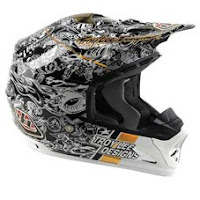
Helmet
Trail Adventure Helmet
© 2009 Troy Lee Designs.

Device also be attention helmet. Helmet that used must light, strong, can to cover important 's part from head, ear and jaw with measure appropriate. Motocross helmet that cover entire vital parts (except eye).

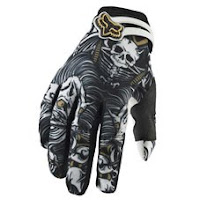
Gauntlet, Shoe and Goggle

Trail Adventure GauntletTrail Adventure Shoe
© 2009 Fox Head Inc.                                               © Thor Motocross. 

Gauntlet and shoe also be protection's device that must be worn. For permanent watch over mobility uses gauntlet limit of wrist. Differ from hand that must flexible budging, foot also be moved besides the flexible also must can protected from wood, stone also another's hardware, with be moved other also must can help to hold back ankle so that not easy slip or dislocate. Therefore, good 's shoe that can to cover ankle.

Trail Adventure Goggle
© Scoot Sport SA.

Device other also doesn't less important goggle. Goggle be eye-shade so that is not hitted chip, sand, stone and or water. Goggle available to also for not glasses's user or glasses's user. Goggle good has flexible, has padding good, not defect easy or broken, has layer counters mist with as according to user's size.

Clothes

Trail Adventure JerseyTrail Adventure Pant
© 2009 Fox Head Inc.

Clothes that can to penetrate sweat with enough cold to used will come to help body's stamina. Clothes too hot will causes fast's evaporation's process from body that causes dehydration. Good clothes jersey and or trousers best long arm to protects skin from suffocating also impact and friction.

B. Protector/Patron

Patron be absolute need that must be worn by a offroader motorcycle to protect body's part from impact and decry possibility dispute. Several patrons among others :

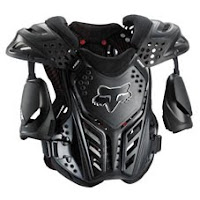
Chest protector/Roost Deflector

Trail Adventure Chest protector
© 2009 Fox Head Inc.

Knee/shin protector

Trail Adventure Knee protector
© 2009 Fox Head Inc.

Kidney belt

Trail Adventure Kidney Belt
© 2009 Fox Head Inc.

Elbow guard

Trail Adventure Elbow Guard


© 2009 Fox Head Inc.


source: trail-adventure.blogspot.com